Local
Shoe shopping and foot care in La Habra
La Habra's shopping runs mostly along Whittier Boulevard, Beach Boulevard and Imperial Highway, with more choice a short drive away in Brea, Fullerton and Whittier.

Shopping tips
- Call ahead for unusual widths. Ask whether the store carries your width in stock or can order it.
- Shop in the afternoon. Your feet are larger later in the day, so shoes that fit then will fit all day.
- Check the return policy. Some stores accept returns only on unworn shoes, so test them on carpet at home first.
- Check a store's listing before you drive over. Stores close or move, and online listings are not always updated.
Foot care
For ongoing foot pain, diabetic foot checks or custom orthotics, a podiatrist is the right first stop. Your insurance or medical group can tell you which podiatrists near La Habra are in your network.
When water gets into the closet
Southern California doesn't get much rain, but a burst supply line, a leaking water heater or a backed-up drain can soak a closet floor overnight. Shoes are often the first thing to sit in it.
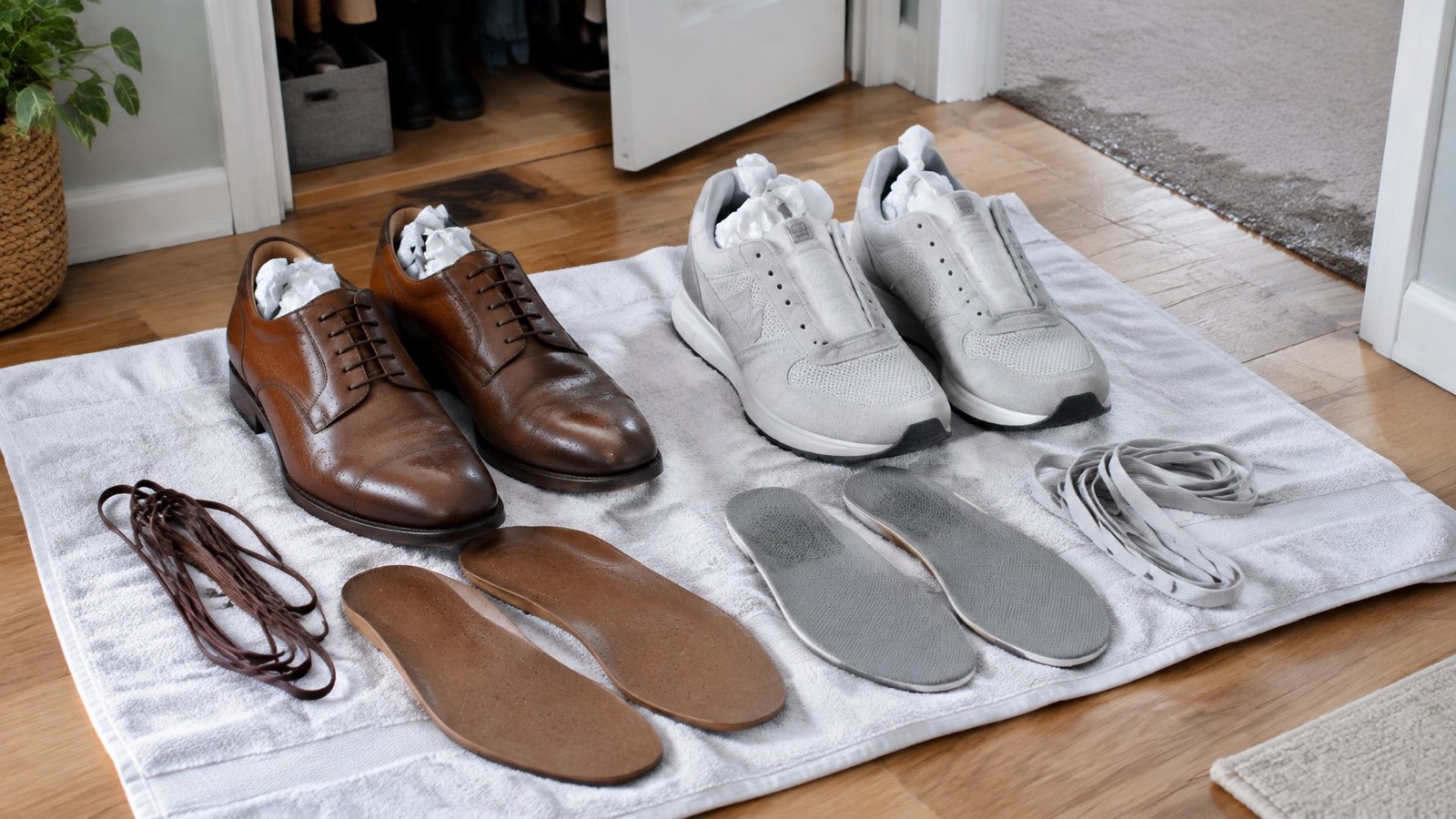
Saving wet shoes
- Take out the insoles and laces so everything dries separately.
- Stuff the shoes with plain paper or paper towels, and change it every few hours.
- Dry them at room temperature with air moving around them. Heaters, dryers and direct sun crack leather and warp soles.
- Once leather shoes are dry, condition them to restore the oils the water pulled out.
When to throw them out
If the water came from a sewage backup or floodwater, it can carry bacteria that cleaning won't reliably remove; the EPA's flood cleanup guidance warns that floodwater may contain bacteria and chemicals. Porous shoes, insoles and slippers that sat in that kind of water are usually not worth keeping, so bag them and throw them out. The floor and walls they sat on are a bigger job: carpet, pad and soaked drywall usually have to come out and hard surfaces need sanitizing, which is set out in this rundown of what cleanup after a sewage backup involves, including why the blocked line needs a plumber first.
The rest of the house
Drying shoes is the easy part. Water that has soaked into carpet, drywall or a subfloor can lead to mold within a day or two, so it needs proper drying equipment. The EPA's guide to mold and moisture says that if wet materials are dried within 24 to 48 hours, in most cases mold will not grow, and that damage from sewage or other contaminated water calls for a professional.