Brands
Comfort shoe brands, explained
Dozens of brands make comfort footwear, and most specialize. Knowing what a brand is generally known for saves you trying on shoes that were never going to work for your feet.
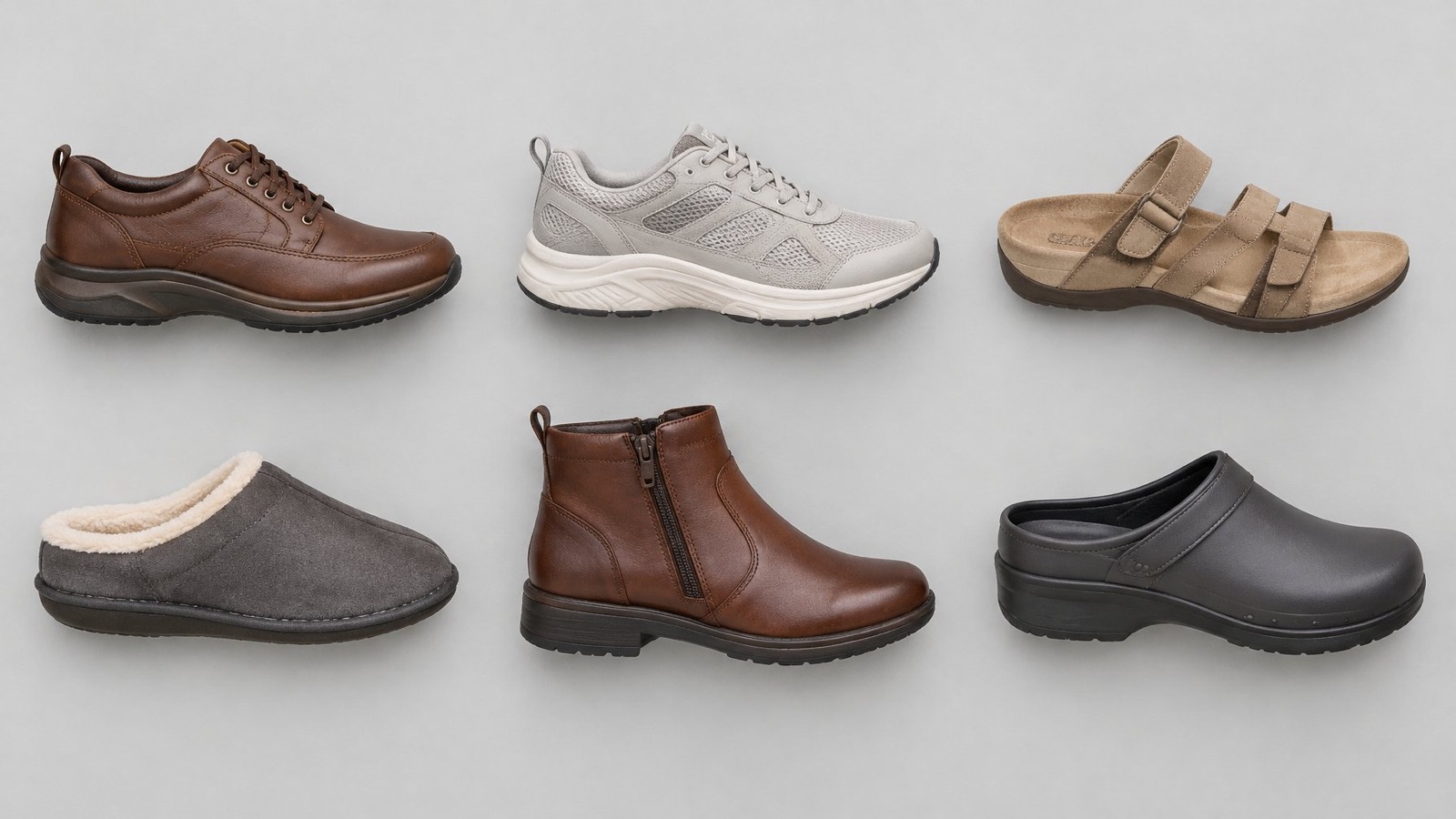
This is a general overview, not a list of what any store stocks. Brands change their ranges often, so check the current fit and widths for the exact model you're considering.
By what you need
| If you need | Brands to look at | Why |
|---|---|---|
| Many width options | New Balance, Brooks, Propét | Several models come in narrow through extra-wide widths. |
| Cushioned walking | Hoka, Brooks, Skechers | Known for thick, soft midsoles suited to long walks on pavement. |
| Arch support built in | Vionic, Birkenstock | Contoured footbeds, including in sandals and slippers. |
| Standing all day | Dansko, Clarks | Popular with nurses, teachers and retail workers. |
| Comfort with a dressier look | Ecco, Clarks, Rockport | Leather shoes with cushioned soles that pass for office wear. |
| Diabetic or therapeutic shoes | Drew, Propét, Dr. Comfort | Extra-depth designs made to take custom inserts. |
How to judge a brand you don't know
- Removable insole: lets you use your own orthotics.
- Width listed by letter: a sign the brand takes fit seriously.
- Firm heel counter: squeeze the back of the shoe. It should hold its shape.
- Bend test: the sole should flex at the ball of the foot, not in the middle.
- APMA seal: the American Podiatric Medical Association's Seal of Acceptance goes to shoes, socks and insoles that a group of APMA podiatrists has reviewed for foot health.
Next, read our fitting tips before you try anything on.