Fitting tips
How to get shoes fitted properly
Feet change with age, weight and pregnancy, and most adults are wearing a size they were last measured for years ago. A proper fitting takes ten minutes and is the single best thing you can do for comfort.
What to bring
- The socks or hosiery you'll wear with the new shoes.
- Any orthotics or inserts you use.
- Your most-worn current pair. The wear pattern on the sole shows how you walk.
The American Academy of Podiatric Sports Medicine gives the same advice for athletic shoes: bring your orthotics and wear the socks you'll use, and treat the measurement as a general guide rather than the answer.
Getting measured
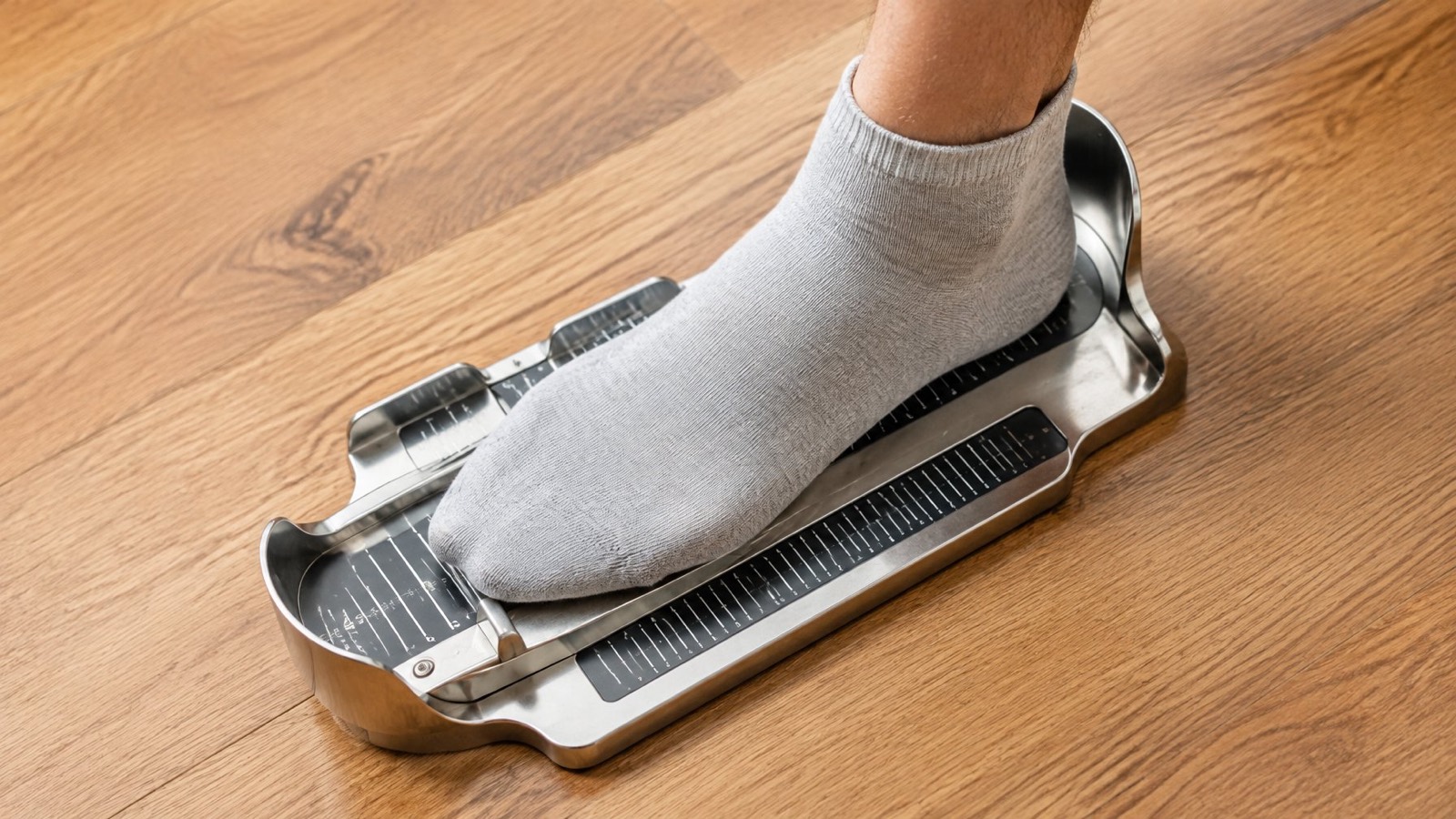
- Ask for length, width and arch length. A Brannock-style device measures all three.
- Measure both feet standing, with your weight on them.
- Go in the afternoon. Feet swell during the day.
- Treat the measurement as a starting point. Sizes vary between brands and even between models.
Wide or narrow feet
If shoes pinch across the ball of your foot, you probably need a wider width, not a longer size. Going up a size to get width puts the shoe's flex point in the wrong place and causes heel slip. Ask for the same size in the next width up.
Orthotics
Take out the shoe's own insole before putting your orthotic in, then check the fit again. Shoes with removable insoles and extra depth work best.
Storing shoes between wears
Shoes put away damp stay damp, so keep them where air can move around them rather than sealed in plastic or piled on a closet floor. If a closet full of shoes starts to smell musty, the shoes may not be the problem: a slow leak behind the wall or under the floor can be feeding mold in the closet itself, and cleaning or replacing the shoes won't stop it coming back. This page on tracking down the moisture behind mold and removing it safely explains what proper cleanup involves and when a small patch is fine to clean yourself.
Diabetic and therapeutic shoes
People with diabetes and reduced feeling in their feet need shoes that won't rub without them noticing. As the National Institute of Diabetes and Digestive and Kidney Diseases explains, nerve damage can mean you don't feel a pebble in your sock or a blister on your foot. Therapeutic shoes have extra depth, soft seamless linings and room for custom inserts.
Medicare coverage: Medicare Part B may cover therapeutic shoes and inserts for people with diabetes who meet certain conditions. Your doctor must certify the need, and the shoes must come from a Medicare-enrolled supplier. Ask your doctor or podiatrist, or check Medicare's page on therapeutic shoes and inserts, for the current rules.
When to see a professional
Persistent heel pain, numbness, sores that don't heal or toes that are changing shape are reasons to see a podiatrist before buying new shoes. This guide is general information, not medical advice.